The ‘Back’ground
Back injuries are deflating to the human psyche and can take weeks to months, even years to fully heal. Research indicates that 9 out of 10 adults will go through some type of back pain in their life and may develop arthritis several years after the injury (wikipedia and WebMD). Moreover, the sedentary career styles in the 21st century have created a dramatic increase in back issues because sitting for long periods of time weakens your back from inactivity. Sitting for hours at a time causes muscles in your leg and stomach to shorten and tighten up, which causes the vertebrae in the back to straighten the natural curve of the spine. Losing the natural curve brings pressure and strain into the back. High impact sports like snowboarding, surfing, and skating are predispose to back injuries from the high impact landings. In the US over $50 billion dollars is spent each year on treatments for back problems. Our body stays in prime condition when it’s in constant motion, so get up, walk or stretch from time to time during the day. I have my own story of back problems, twice, which led to bedridden for 3 months at the age of 31. The injury stole my athletic career. I thought I was too young to be going through a serious back problem (herniated vertebral discs). I worried that I was going to be handicapped for the rest of my life.
The complex architecture of the vertebra column has four sections, cervical (top area), thoracic (mid area), lumbar (lower mid area) and the sacral (bottom). The spinal column is made up of 33 vertically connected bones covering the spinal cord. Fitted between the vertebra are intervertebral discs. The discs are like jelly filled doughnuts that fill in the spaces between each vertebra in the spinal column. These discs absorb the pressure to your spine during movement, so you can live a pain free active lifestyle. When there is too much pressure on the spine the discs will expand but if there is a constant or high impact compression, the discs may bulge out of the spinal cord and push against the nerves. This can cause phantom pains and muscles spasms throughout the body. If a disc is pressured too much for too long it may herniate (rupture), the jelly squeezes out of the disc and into the nerves, initiating inflammation. When inflammation kicks in, the nerves fire uncontrollably and the muscles around your back lock up causing more pain.


The Mental Fight
My first injury occurred from towing at waves using a Jet ski for 7 hours non-stop. Tow-ats are brutal on your body if you don’t know what you are doing. The second injury occurred nearly 7 months later in my lumbar L3, L4/L5 discs, from combination of snowboarding, followed immediately by several long flights straight into North Shore Hawaiian waves. After the first injury, I received a cortisone shot to halt the inflammation. In a few weeks I felt good enough to surf again. I thought I wouldn’t need too much recovery time. Little did I realize what a mistake I was about to make. When the cortisone shot wore off, the discs blew out and I was on my back in horrible pain for 3 months. The symptoms of a herniated disc depend on the location of the herniation. With mine at L3, and L4/L5 I developed sudden on set of loss of feeling and inability to move my left foot, also called drop foot. The muscles tightened up in my left leg and hip, with continual leg spasms that made it painful to walk. I consulted several physicians and all suggested surgery (Discectomy) to repair the discs. However, Dr. Sten Kramer (Newport, California) had worked with other athlete’s, surfers particularly who had gone through similar back problems. Dr. Kramer utilized non-surgical methods to achieve full recovery. Dr. Kramer suggested anti-inflammatory drugs, including both cortisone and a non-steroidal anti-inflammatory drug (Mobic) to stop the swelling. After a month, a Psychical Therapist was needed to promote my recovery, to build and train my muscles to prevent more damage during physical activity. I was so down on myself at that moment, thinking none of this was going to get me back to having an active lifestyle let alone surfing. However my first hint of hope came after, the cortisone and anti-inflammatory drugs got me to my feet, yet I was still hobbling around and still in serious pain, and NO surfing. My friend Jeremy Sherwin suggested I see his Physical Therapist, Brad Jones the founder of b project (Carlsbad, California). Brad is well known in the snowboard community as one of the best PT’s in the business, but in the back of my head I was skeptical he might not be able to help with my back problem and I didn’t want to risk more pain.
Patience versus Quick Fix
A major part of going through a back problem or any physical problem for that matter is how vulnerable the injury makes you feel. Anything for a quick fix becomes the goal. I found myself trying all sorts of things to alleviate the pain, which in the end delayed me from what I really needed. There is a secret for repairing a back problem, it is patience. A back problem means there’s an imbalance in the mobility of your body. Your body needs to retrain to re-balance itself. I calmed down and realized I needed patience, time and hard work to recover.
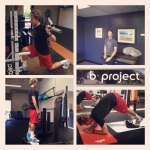
I called up Brad Jones and talked to him about his experience working with patients with back problems. Brad works with people everyday with these types of injuries. I was shocked on how many people could be going through similar pain as me. After a thorough assessment, Brad started to massage the nerve off the muscle, loosening up the atrophied muscles in my left leg and hip but I quickly realized, I needed a new level of pain tolerance. After I wiped the tears away from my eyes, Brad prescribed me stretching exercises that I could hardly do without screaming in pain. I was starting to doubt whether I had made the right choice. After a week of the stretches and painful massages, to my surprise the pain began to subside. I had another dose of hope again to achieve an active life and maybe surf. Brad said after the muscles are loosened, the hard work toward repairing and prevention would begin. Brad helped me retrain and strengthen my hip and core muscles to take the impact pressures that will allow me to surf again. After two months of the training and stretches ritually, I was back in the water. YES! My confidence was coming back, too. And after a year of working at the b project, I was surfing better than when I was competing full time. Why? Because I took the long road to build a solid foundation of muscles to protect my back and reset the imbalance. I have to work a lot harder to stay in surf shape now, but once you have worked that hard to build yourself back up to health and that quality of life, you realize there’s no desire to go back. Stretching, warm-ups and training is a fact of life, like brushing teeth. Now I have the reward of healthy and strong back.

New Quality of Life
Andre Agassi’s autobiography Open revealed how much back pain he had in his tennis career, on some days he just couldn’t make it to the court. When I start feeling tightness in my back, I go through thoughts of should I keep pushing through or should I choose patience, do my warm-up and stretches. I always know doing the warm-ups and stretches is the long road but this is the best route for my back. That long road leads me to the pleasure of surfing, pain free. If I can offer a piece of advice to those with back pain, stop looking for the quick fix. Ask yourself for patience, time, effort to heal and repair, and connect with a knowledgeable Physical Therapist. A physical therapy program goes the long way in the recovery and sustainability of your body. Surfing requires a lot of back movement, so make your legs, hips and core strong and that will take the strain off your back. When your back feels tight take time to relax your leg and hip muscles with stretches or a foam roller or a good massage.
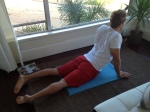
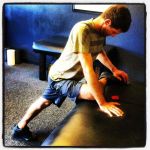
Below is a foam roller exercise and a light stretch routine to loosen up the legs, each stretch hold 30 seconds x 2.




Sources
http://www.delmarchiropracticsports.com
http://bprojectphysicaltherapy.com
http://en.wikipedia.org/wiki/Back_problems
http://www.webmd.com/back-pain/guide/back-problems-and-injuries-topic-overview
http://en.wikipedia.org/wiki/Foot_drop
http://www.medicinenet.com/meloxicam/article.htm
Open An Autobiography by Andre Agassi, 2010
Get your Life Back, The Ultimate Guide to Healing a Herniated Disc by Dr. Ron Daulton, Jr. 2007

 AWARE Surf Coaching
Thanks for this encouraging post! I kind of went through the same thing myself (just a dance career) and also had to learn that patience is key. Funnily enough I noticed that my beginner level surfing was really good on my back 🙂 How long has it been since your initial problems?
I had the back injury 4 years ago and I have been healthy and strong without back issues for 2 years now. My surfing is very happy with a healthy back. Your blog was very informative, I liked the article on sitting properly. It is interesting to know different pressures in the different sitting positions. Hope all is well.
Thanks, Austin! I’m glad to hear your back is doing so good! It’s been a bit over a year for me now, so I hope I can get it 100% in a couple months. It has improved a lot so far! My blog is still fairly new, but I hope to be able to share more about what I’ve learned and create a platform where people can find useful information. Do you mind if I create a short post with one of your pictures, where I link to your blog? Would love to share about your post!
Please share, and I hope you heal up well and leave it behind you.
I just want to thank you Austin for this inspirational post!! Im a 24 year old skater and had surgery for a herniated lumbar disk when i was 22, I had to stop skating for a while, just recently i’v been going to my local park 4 days out of the week and feeling much better but still there are days where I can feel my back in pain and I know I just have to stop pushing myself or els ill be in bed for a few days. Like you said iv been looking for a quick fix all this time. Never really looked for advice from someone who skates, surfs or snowboard and i’m glad I found this because I now know that ill be able to be skating to my full potential. I’ll be taking ALL advice you have given here.! Also your so right about the “deflating to the human psyche” thing, you have no idea how positive i feel about this whole situation after reading this! THANKS AGAIN!!!
Hi Oscar,
Thanks for the kind words, I know it feels depressing to have a back injury happen to you and at a young age, but its for the better because it brings you alot of knowledge about your body and how to keep it feeling good. I wish you a full recovery and big skate bowl ramps in your future 😉
Austin. So cool finding this. I had various surfing injuries (San Francisco) that led to 10 years of pain/Aleve/flair-ups. Long story short – in 2014 I ended up having MAJOR issues after surf trip to Nicaragua. I ended up losing all control of left leg and a micro discectomy later thought I would be on road to recovery. 6 month later the disc essentially collapsed. November 9th 2015, I had ALIF surgery!! It is March 30th and I just had my 2nd mountain bike ride. I have more feeling in left foot and I am 4 weeks with ZERO pain killers (no Aleve, no morphine, no oxycodone!). I am actually feeling great and for the first time in 10+ years my back muscles are not freaking out.
Behind me is a 5.9 Pyzel virgin board (arrived the week after 1st surgery) – it is a constant reminder of what I want to get back to doing. I might not be able to short board the way I used to, but I want to hit the water and do trips again.
So, I have a few questions if you are willing to answer:
1. Do you wear anything on your foot when you are surfing? (brace?)
2. Did you change your popup?
3. Do you suffer from cramps in your legs? This worries me a lot. I find I cramp a ton @ night in various spots (foot, calf, etc.)
Thanks again for posting!
Hello Jean,
Thank you for your story. If you give your body time it will heal up and you will be able to surf again.
When I first got back into the water, I rode a long board for a month and took it easy in the surfs, quik 30 min surfs and just a few waves. I also had a good warm up I would do before I surfed to get the hips and core fired up and then stretch.
1) My drop foot got better and better with the exercises and stretches and didn’t need any brace for it.
2)My pop up stayed the same but I was slower getting up and had to keep my head up higher.
3) At first the cramping was gnarly but it slowly has gone away as my hip has gotten stronger but I still get cramping in my foot, calf, hamstring and hip. When I feel it coming on, it is a good signal to me that my muscles are tired and tight and need to be stretched. I would recommend that you work with a good psychical therapist to build you back up or try pilates.
I have a question for you, Jean.
1)was it your front foot surfing that you had the drop foot on?
Hope you get back in the water soon
Austin
Hi – thanks for your email.
I am a regular and it was my left foot – so yes, front.
I did not say much about the drop foot I had/have. Pre ALIF, I had next to zero feeling from ankle to toes. I think I rolled my ankle almost 100 times (no exaggeration) as I could not control it. Post ALIF, it has strengthened with exercise but I think I am at about 40% foot control. If I walk without a brace, you see I can’t pick up the foot correctly.
Surgeon thinks it will continue to heal but the markers show that it will never get beyond about 70% capabilities since the sciatic nerve was so damaged. I agree PT on this is good and anything to strengthen it helps.
Since I had a fusion, I think I am about 6 months before being able to consider really getting in the water, but strengthening these muscles in back and legs is really an immediate goal.